
What Australian Small Businesses Should Do This Week
The Google May 2026 core update began rolling out on 21 May, and the rollout is expected to finish around 4 June 2026. If your traffic has wobbled in the last fortnight, that is almost certainly why, and the next two weeks are the right time to check, not panic, and tighten up the parts of your site that this update rewards.
This one matters more than usual for Australian small businesses because it landed in the same week Google switched AI Mode over to its new Gemini 3.5 Flash model at I/O 2026. In plain English, the way Google chooses which sites to rank, and which sites it quotes in AI answers, has shifted at the same time. Below is what changed, how to read your own data this week, and the practical fixes our team is making for clients right now.
What is the Google May 2026 core update?
What is the Google May 2026 core update?
A core update is a broad change to how Google ranks pages across every industry. Google released the May 2026 update on Thursday 21 May 2026 at 8:40am Pacific time, and confirmed the rollout would take up to two weeks, with completion expected around 4 June. You can see the live status on Google’s own Google Search Status Dashboard.
Two things make this update different from a normal core update. First, it arrived only six weeks after the March 2026 core update, which is a faster cadence than Google’s usual three-to-four-month gap. Second, it rolled out in the same week as Google I/O 2026, where Google announced that AI Mode in Search is now powered by Gemini 3.5 Flash and that AI Overviews now reach 2.5 billion monthly active users. Search and AI Search are being tuned in parallel, and you are seeing the result.
Who won and who lost?

Who won and who lost?
Early analysis from across the SEO industry points in one clear direction: businesses that own a real area of expertise have gained, and pages that look generic, anonymous, or assembled from other sources have lost. The pattern in the losing pages is consistent. Thin content, no clear author, no schema markup, and a “technically on topic but not actually useful” feel. Pages that hold up have full author markup, recent dates, FAQ schema on key pages, and content that answers the question without padding.
For Australian small business sites we look after, the early pattern we are seeing matches that. Service pages with clear local information, named team members, and useful detail are stable. Old blog posts that were chasing keywords without genuine expertise are the ones losing positions.
Why AI Mode and AI Overviews change the picture
Here is the part most owners are not factoring in yet. AI Mode (the chat-style answer inside Google Search) and AI Overviews (the boxed summary at the top of a normal results page) do not cite the same sources. Recent analysis covered by Search Engine Journal puts the overlap at roughly 13.7%. Only about 38% of pages cited in AI Overviews still rank in Google’s top ten, down from around 76% in mid-2025.
What this means in practice for an Australian small business owner: your old “we rank number 3 for X” rule of thumb no longer guarantees you will be the answer Google reads aloud, quotes in its AI summary, or sends to a customer using AI Mode on their phone. Visibility now lives in three places at once, and you need to be findable in all three.
A 14-day action plan for the rest of the rollout
We rebuilt our standard post-core-update checklist for this exact update. Here is the short version our team is working through with clients this week.
| Day range | What to do | Why |
|---|---|---|
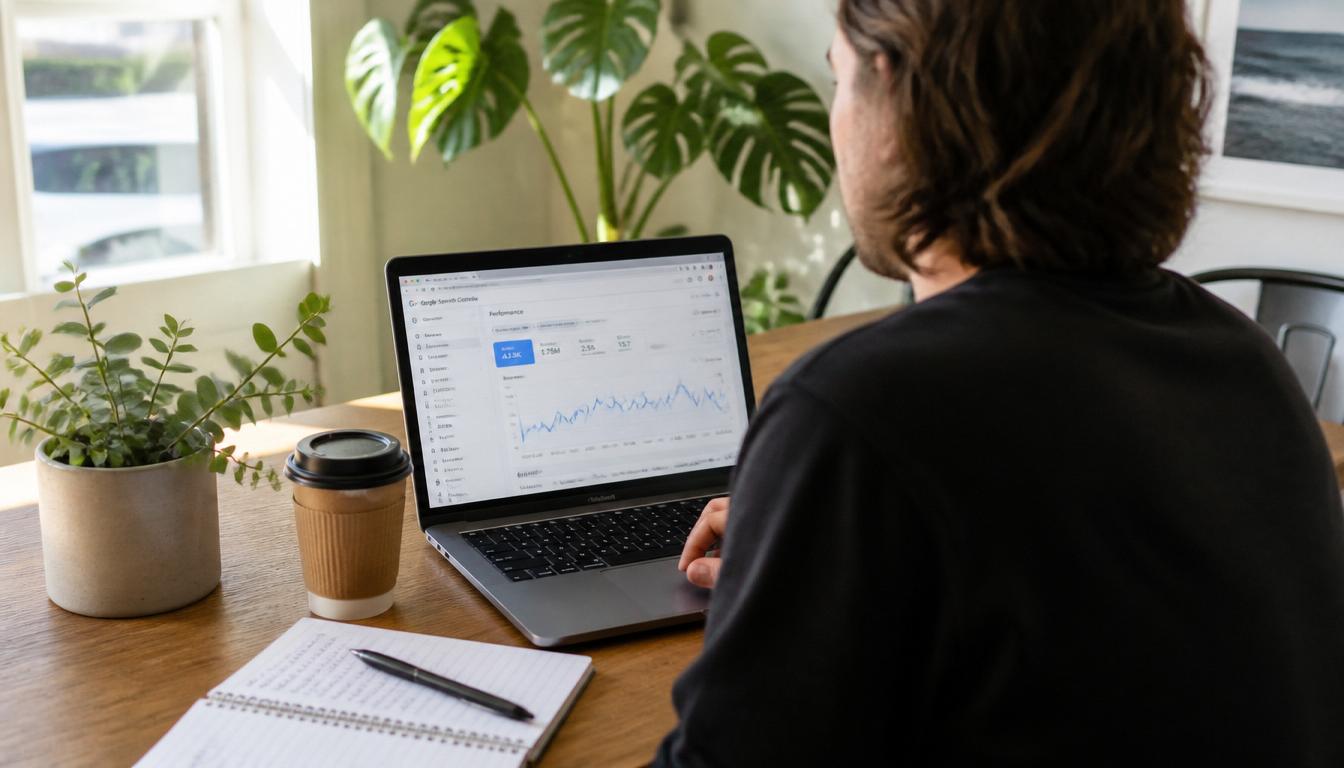
| Day 1–3 | Pull a clean before-and-after report in Google Search Console (last 28 days vs previous 28 days). Group by URL and by query. | You need to see which pages and which search terms moved before you change anything. |
| Day 4–7 | For pages that dropped, check author byline, last-updated date, FAQ schema, and whether the content actually answers the question in the first paragraph. | These are the signals winners had and losers did not. |
| Day 8–10 | Re-check Core Web Vitals (LCP, INP, CLS) in PageSpeed Insights for your top five pages. Fix images, cut unused plugins, and turn caching back on if a recent change disabled it. | Slow pages were already at risk before this update. They are more exposed now. |
| Day 11–14 | Open your Google Business Profile. Confirm hours, services, address, phone, and primary category. Add three to five new photos. Reply to any new reviews. | AI Mode leans heavily on Business Profile data when someone asks a local question. |
We deliberately keep the first ten days observational. Google’s own guidance is that you should not make sweeping changes during a rollout, because the system is still settling. Wait for the data to stabilise, then act on the patterns you see.
Five things not to do this week
According to data from Search Engine Journal and Wordfence reporting, the May 2026 update has produced a noticeable spike in panic-driven mistakes that make things worse. Avoid these:
- Do not delete or “noindex” pages that dropped a few positions. A small drop during a rollout is not a Google penalty, it is a re-ranking.
- Do not rewrite every page on the site at once. You will lose the signal of what was actually causing the drop.
- Do not buy backlinks to recover lost rankings. Manual actions for unnatural links have not gone anywhere.
- Do not change your URLs without 301 redirects. We see this every single core update.
- Do not turn off your caching or security plugins to “rule them out”. Slow, exposed sites get worse outcomes, not better ones.
What this means for AI search visibility specifically
If you want to be the page that Google’s AI quotes back to a customer in Sydney, Brisbane or Perth, three things matter more than ever:
First, write a clear, direct answer in the first two or three sentences of every important page. AI models extract from the top of the page. If the answer is buried in paragraph six, it will be skipped.
Second, add structured data. At a minimum, every service page should have LocalBusiness or Organisation schema, every important article should have Article schema with author and dateModified, and any page with questions should use FAQPage schema. This is the single most consistent pattern in the post-update analysis.
Third, build genuine entity signals. That means being mentioned, by name, in places Google trusts. A clean Google Business Profile, a verified ABN in the right places, mentions in local press, and consistent citations on directories like True Local and Yellow Pages all help Google understand that your business is a real, locatable thing, not just a URL.
How we are handling this for our clients
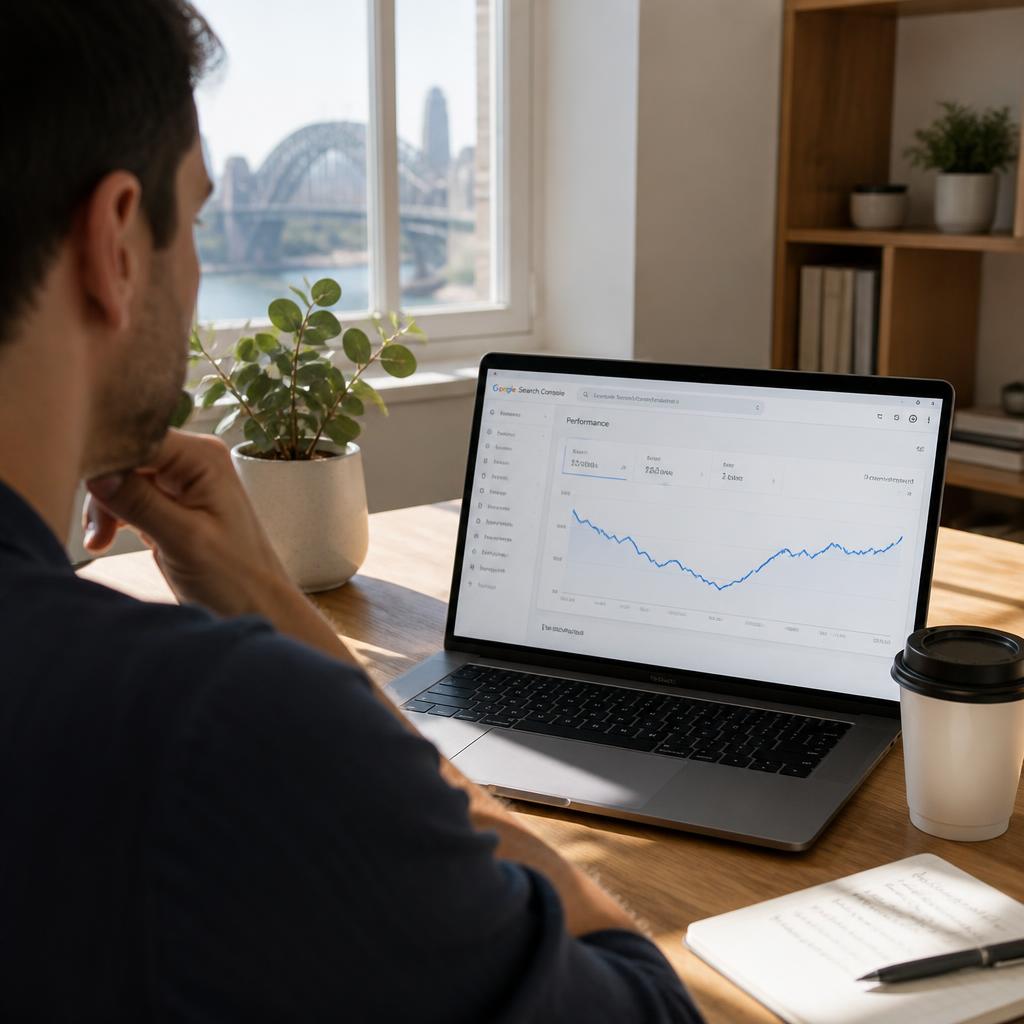
For every site on a WordPress care plan with us, our team has already done the Search Console pull, opened the Core Web Vitals report, and queued schema fixes for any page that is missing them. If you would like us to do the same for your site, we offer a free 30-minute website audit where we run the same review and send you the findings in plain English, with no obligation to do the work with us.
You can also speak with our team about ongoing WordPress SEO services if you would like the monthly tracking, schema work, and AI-citation monitoring handled in the background while you focus on running the business.
Here are some frequently asked questions
When does the May 2026 Google core update finish rolling out?
Google began the rollout on 21 May 2026 and confirmed a window of up to two weeks. Completion is expected around 4 June 2026, although the dashboard is the source of truth for the official end date.
My rankings dropped during the rollout. Have I been penalised?
No. A drop during a core update is a re-ranking, not a penalty. Google has stated that ranking drops do not necessarily indicate anything is wrong with the page. Wait for the rollout to finish, then review the patterns in Search Console before making changes.
Don’t shy away from using this helpful block to guide your website users to useful pages. Be the guide that they deserve!
Do I need to change anything for AI Mode and AI Overviews?
Yes, although the work overlaps with normal SEO. Focus on clear direct answers near the top of each page, accurate schema markup, a current author byline, and a fully completed Google Business Profile. AI Mode and AI Overviews now cite different sources from one another, so do not assume that a top-ten ranking guarantees an AI citation.
Don’t shy away from using this helpful block to guide your website users to useful pages. Be the guide that they deserve!
Does this update affect small Australian websites differently from big sites?
The mechanics are the same for every site, but small Australian businesses tend to gain more than they lose if they have real local expertise. Generic content sites and aggregators are the ones losing the most ground. Local service pages with named team members, real photos, and accurate suburb information are holding up well.
Don’t shy away from using this helpful block to guide your website users to useful pages. Be the guide that they deserve!
How long until I should expect to recover from a drop?
Google’s own guidance is that the biggest recovery shifts usually come with the next core update, not within the current one. Use the rest of June and July to fix the underlying issues, then expect to see the result reflected by the next major update later in 2026.
Don’t shy away from using this helpful block to guide your website users to useful pages. Be the guide that they deserve!